Writing
The Hilarious Side of HTTP Status Codes: What Developers Can Learn From 418 I'm a Teapot & Beyond


Milad Ezzat
@miladezzat12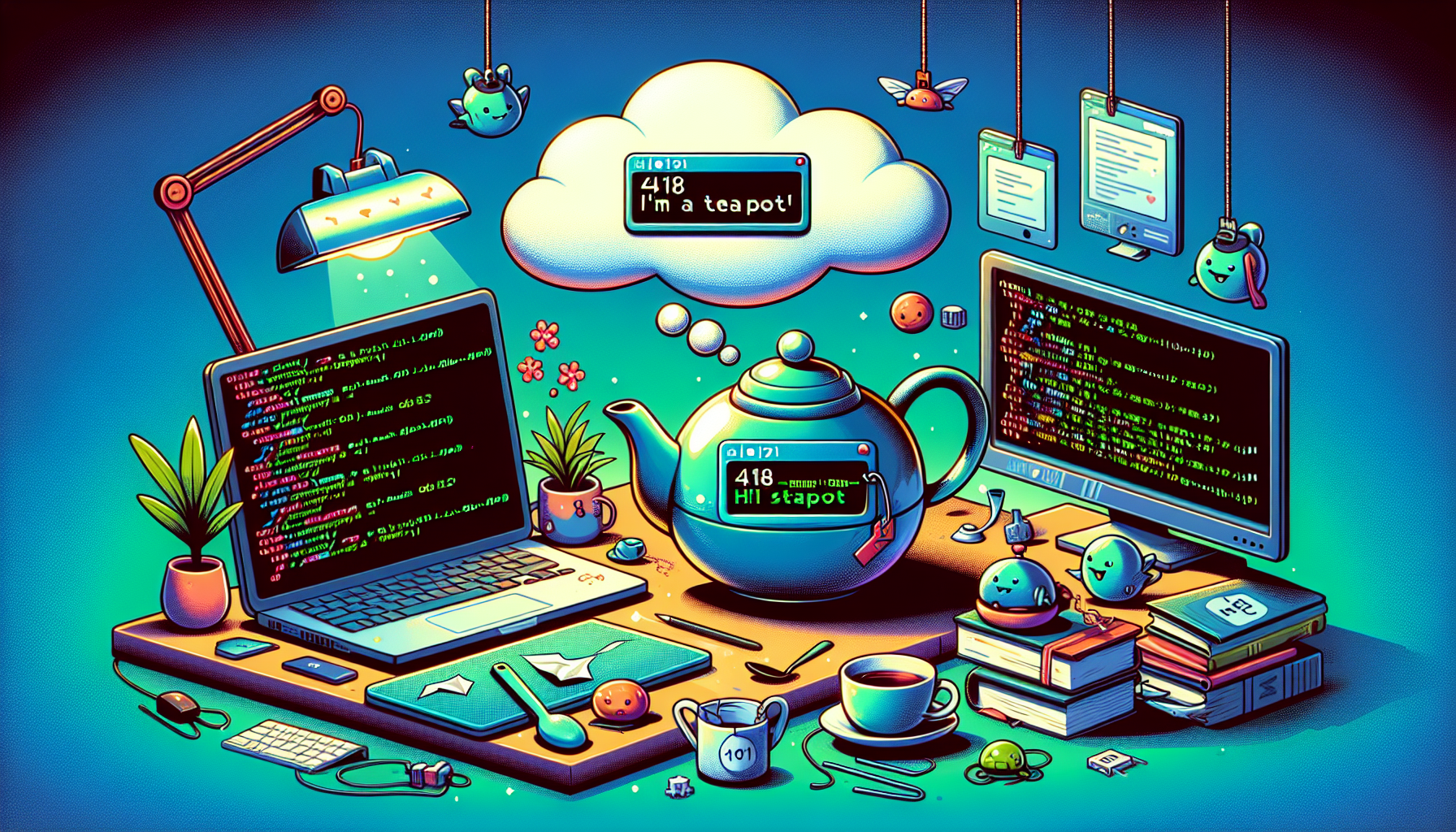
Diving into the world of web development, it's easy to get lost in a sea of HTTP status codes. They're the backbone of our understanding of what's happening between clients and servers, guiding us through the smooth seas and the stormy waters of internet communication. But amidst the standard fare, there's a delightful undercurrent of humor and creativity that not only lightens the mood but also offers some unexpected lessons. Join me, Milad, on a whimsical journey into the hilarious side of HTTP status codes, where the infamous 418 I'm a Teapot is just the beginning.
Introduction to HTTP Status Codes: Not Just Numbers
At first glance, HTTP status codes might seem like a dry subject. They are, after all, just three-digit numbers that tell us if something went right or wrong with a web request. But there's a rich language within these codes, a way for servers to communicate with clients beyond simple success or failure. From the familiar 404 Not Found to the victorious 200 OK, each code has its place and purpose. Yet, hidden among these utilitarian messages are gems of humor and humanity, reminding us that even in the most technical of realms, there's room for a laugh.
Decoding the Legends: The Story Behind 418 I'm a Teapot and Others
Perhaps the most famous of these is 418 I'm a Teapot. Introduced as part of an April Fools' joke in the Hyper Text Coffee Pot Control Protocol (HTCPCP), it's a code that has brewed beyond its origins to become a beloved part of internet culture. The story goes that if you try to use your HTTP client to make a coffee with a teapot, it should respond with this status code, politely informing you of its inability to brew coffee because, well, it's a teapot.
// Note: This code snippet is purely fictional and part of the HTCPCP April Fools' joke, not for actual web development.
// Imagine trying to make coffee with a teapot
fetch('/make-coffee', {
  method: 'BREW', // Note: 'BREW' is a fictional method from the HTCPCP joke, not part of standard HTTP methods like GET or POST.
  headers: {
    'Content-Type': 'application/coffee-pot-command', // Note: This content type is fictional and part of the HTCPCP joke, not recognized as a valid MIME type.
  },
})
  .then((response) => {
    if (response.status === 418) {
      console.log("I'm a teapot! Can't brew coffee.")
    }
  })
  .catch((error) => console.error('Error:', error))
But 418 isn't alone in its whimsy. There's 451 Unavailable For Legal Reasons, which, while often associated with Ray Bradbury's Fahrenheit 451 due to its thematic similarity regarding censorship, the choice of number and its thematic relevance to censorship strongly suggests a deliberate homage, even if the RFC does not explicitly state 'Fahrenheit 451' as the inspiration. These codes serve as reminders that our digital world is still very much human, shaped by our culture, our humor, and our values.
What These Easter Eggs Teach Us: Reliability, Creativity, and Error Handling in Web Development
Beyond the chuckles, there's wisdom to be found in these humorous HTTP status codes. They teach us the importance of reliability in web development—knowing the right code for the right situation ensures clear communication and efficient problem-solving. But they also inspire creativity, encouraging us to think outside the box and infuse our work with personality and warmth.
When it comes to error handling, these codes remind us that it's not just about catching errors; it's about how we respond to them. A creative error message can turn a moment of frustration into a moment of delight for the user, making your application more memorable and engaging.
Applying the Fun to Your Work: Creative Debugging and Error Messages
So, how can we take the spirit of 418 I'm a Teapot and apply it to our work? Let's start with debugging. Imagine logging errors with a bit of humor:
// Note: Ensure your debugging humor is clear and does not confuse the functionality.
if (!coffeeMaker.isTeapot) {
  brewCoffee()
} else {
  console.error("418: I'm a teapot. Please don't ask me to brew coffee.")
}
This not only lightens the mood but also makes the debugging process more enjoyable. When it comes to user-facing error messages, consider crafting messages that are both informative and engaging. Instead of a generic error message, why not something more specific and fun?
// Note: It's essential to balance humor with clarity in error messages.
function handleError(errorCode: number): string {
  switch (errorCode) {
    case 404:
      return "Oops! We've searched high and low but couldn't find what you were looking for."
    case 500:
      return "Oh no! Something went wrong on our end. We're on it!"
    case 418:
      return "I'm a teapot! Unfortunately, I can't brew coffee."
    default:
      return 'An unknown error occurred. But rest assured, our team of wizards is on it!'
  }
}

console.log(handleError(418))
By incorporating humor and creativity into our error handling and messaging, we humanize our applications, making them more relatable and enjoyable for users.
In conclusion, HTTP status codes are more than just numbers—they're a language of their own, rich with potential for humor, creativity, and clear communication. As developers, we have the opportunity to infuse our work with personality, making the web not only more functional but also more fun. So next time you're debugging or designing error messages, remember the lessons from 418 I'm a Teapot and its fellow codes. Let's brew some delight in the digital world, one status code at a time.