

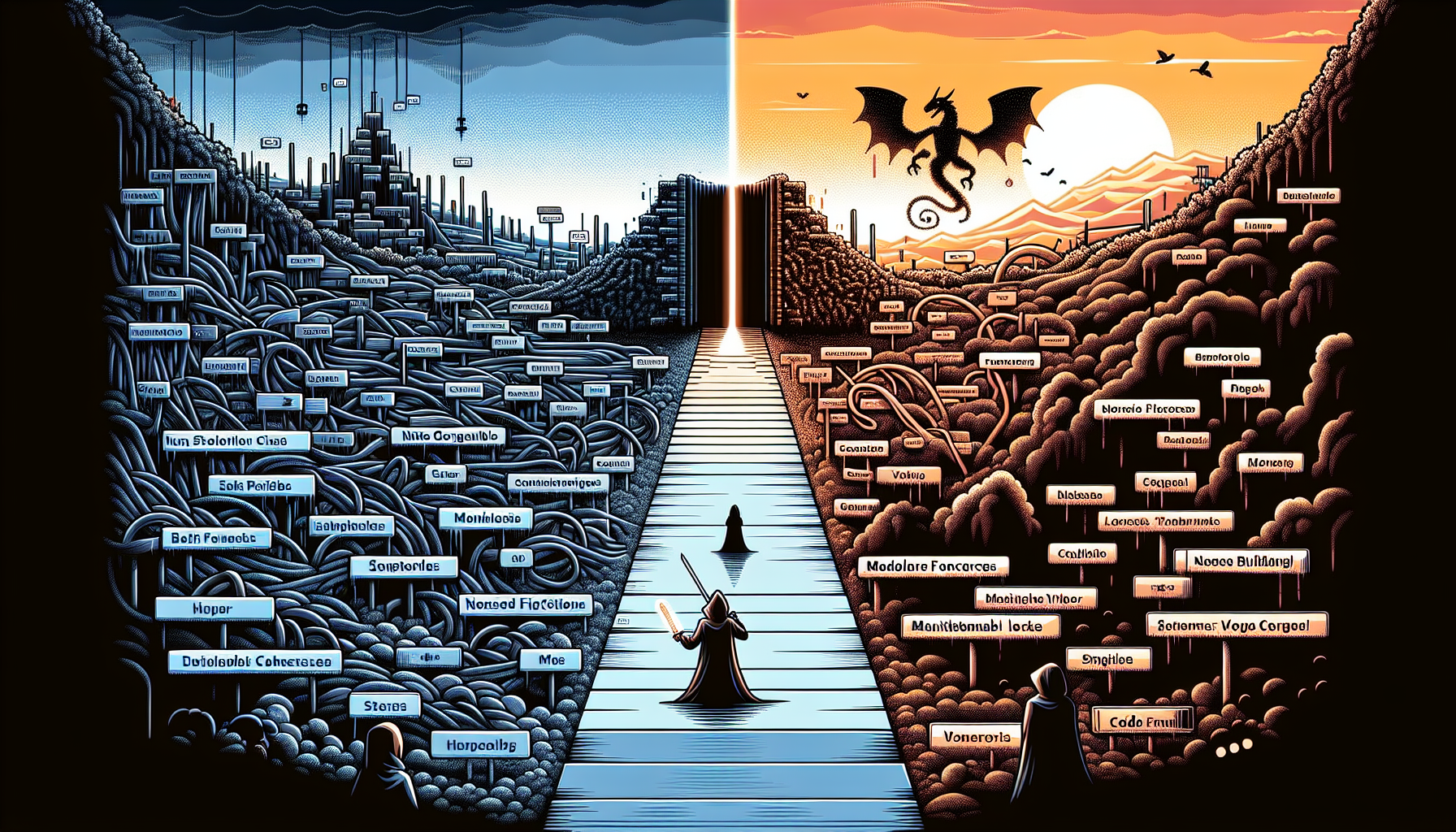
In the twilight of my programming career, I stumbled upon a digital relic so ancient and convoluted, it could only be described as a legacy codebase. This codebase, a monolithic beast from the bygone era of software development, was my destiny to refactor. The journey was long, filled with perils and enlightenment alike. Herein lies the chronicle of that odyssey, a tale of transformation from a monolithic beast to a modular phoenix, through the art and science of refactoring.
Act I: Encounter with the Monolithic Beast
The first gaze upon the codebase was like peering into the abyss. Thousands of lines of JavaScript, tangled like the threads of fate, sprawling across single files that could only be described as digital leviathans. Functions nested within functions, callback hell deeper than the Mariana Trench, and variable names that could only have been conceived by a madman. It was here, in this moment of despair, that I, Milad, vowed to conquer this beast.
Act II: The Refactoring Quest Begins - Breaking Down the Monolith
Armed with nothing but my wits and the trusty VSCode, the quest to break down the monolith began. The strategy was simple yet arduous: modularize, modularize, modularize. The first step was to identify logical separations within the codebase. Functions that performed specific tasks were to be the first to be liberated.
// Before: A snippet of the monolithic madness
function handleEverything() {
  // 100+ lines of code handling various tasks
  connectToDatabase()
  fetchData()
  processData()
  renderData()
}

// After: Breaking it down into modules
function connectToDatabase() {
  // Connection logic
}
function fetchData() {
  // Fetching logic, now clearly part of the 'db' module
}
function processData() {
  // Processing logic
}
function renderData() {
  // Rendering logic
}

// Exporting functions from the 'db' module
module.exports = { connectToDatabase, fetchData, processData, renderData }
This simple act of breaking down functions into their own modules was like the first ray of sunlight in a decade-long winter. It was the beginning of understanding that refactoring wasn't just about making the code "better" but making it more understandable, maintainable, and less daunting for any soul brave enough to encounter it in the future.
Act III: Trials and Tribulations - Debugging and Testing
With the monolith starting to crumble, a new challenge arose: ensuring that the newly modularized code worked as intended. This is where the trials began. Debugging and testing became the daily bread. The jesters of the code, bugs, and unexpected behavior, made their presence known with glee.
Here, I learned the value of writing tests. Using Jest, a testing framework for JavaScript, I began writing unit tests for each module. This not only ensured that each function performed as expected but also safeguarded against regression in the future.
// An example of a simple Jest test for the fetchData function
const { fetchData } = require('./db')

test('fetchData returns expected data structure', async () => {
  // Simulating a try/catch for potential fetchData errors
  try {
    const data = await fetchData()
    expect(data).toHaveProperty('id')
    expect(data).toHaveProperty('value')
  } catch (error) {
    console.error('fetchData failed', error)
  }
})
This process was akin to forging armor for each module, a protective layer that would defend against the chaos of change.
Act IV: Emergence of a Modular Phoenix
As the days turned into nights and back again, the once overwhelming monolith began to transform. What was once a behemoth of spaghettified code started to resemble a well-organized, modular architecture. Each function, each module, now stood on its own, a testament to the power of refactoring.
The final structure resembled something of beauty—a collection of modules, each responsible for a specific part of the application, communicating through well-defined interfaces. The beast had been tamed, and from its ashes rose a modular phoenix, ready to face the future with grace.
// A glimpse into the modular architecture
const db = require('./database')
const dataProcessor = require('./dataProcessor')
const renderer = require('./renderer')

async function main() {
  await db.connect()
  const rawData = await db.fetchData()
  const processedData = dataProcessor.process(rawData)
  renderer.render(processedData)
}

// Properly calling the 'main' function
main()
  .then(() => console.log('Completed'))
  .catch((error) => console.error(error))
Conclusion: Lessons Learned from the Refactoring Odyssey
The journey of refactoring the legacy codebase was fraught with challenges, yet it was a journey of immense growth and learning. Here are the key takeaways from this odyssey:
- Start Small, Think Big: Begin with small, manageable changes and gradually work your way up. This approach helps maintain sanity and provides a sense of progress.
- Testing is Your Shield: Writing tests may seem like a chore, but it's a protective shield that safeguards against regressions and bugs. It's an investment in the codebase's future and your peace of mind.
- Modularization is Liberation: Breaking down a monolithic codebase into modular components not only makes the code more manageable but also enhances readability and maintainability.
- Patience is a Virtue: Refactoring is not a sprint; it's a marathon. Patience, perseverance, and a touch of humor are essential tools in this journey.
The legend of the legacy codebase and its transformation is a tale of triumph, a reminder that no codebase, no matter how daunting, is beyond salvation. As developers, we wield the power to refactor, to improve, and to transform. Let this chronicle be a beacon of hope and a guide for those who dare to embark on their own refactoring quests. May the code be with you.